By Ryan Michaels | The Maine Mirror
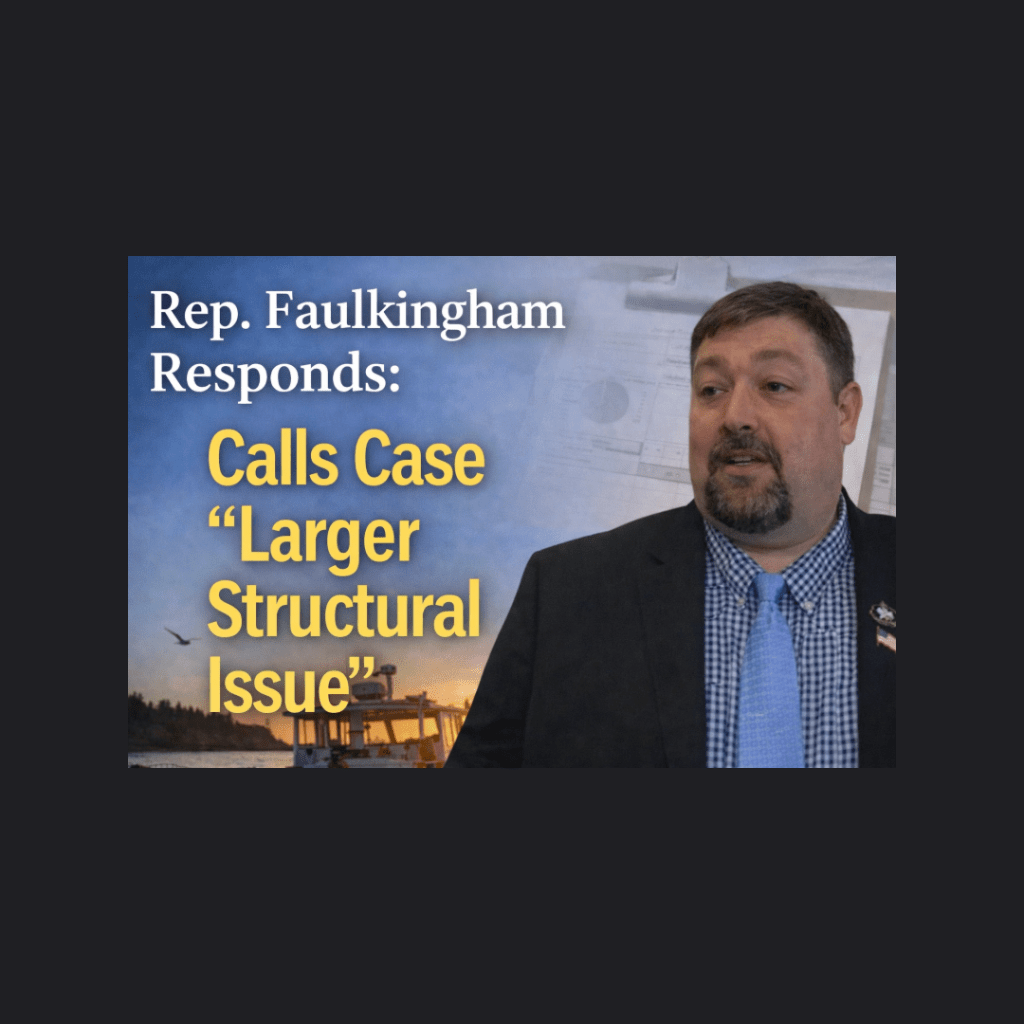
Following a recent article published by The Maine Mirror regarding a labor enforcement action tied to his lobstering operation, House Minority Leader Billy Bob Faulkingham has provided an on-the-record response, offering additional context and raising broader concerns about how Maine’s labor laws are being applied within the state’s lobster industry.
Faulkingham’s response comes after being invited to share his perspective as part of an effort to ensure a balanced and complete understanding of the issue.
A Shift From Individual Case to Industry-Wide Concern
In his response, Faulkingham emphasized that the situation extends beyond a single enforcement action, pointing instead to what he describes as a larger structural issue affecting Maine’s working waterfront.
“Hi Ryan! Thanks for the opportunity to comment. That’s not a badly written article but the main problem is that you’re assuming the department of labor is correct on its assessment of violations but they just don’t align with our traditions. True this decision doesn’t align with our traditions, but also true is that every deckhand is an independent contractor. Captains are not employers by definition. This is not just tradition, but also the industry standard dating back as far as labor laws creation. For them to define captains as employers wouldn’t just impact youth participation, it would change the industry standard for 5,000 licenses. That’s why the department should stop gaslighting the industry and admit their mistakes. I hope this clears that up.”
At the core of his argument is the classification of lobster boat crew members—commonly referred to as sternmen or deckhands. Faulkingham asserts that these individuals are not traditional employees, but rather independent contractors participating in a shared economic model.
According to this perspective, lobstering operations often function less like conventional employer-employee relationships and more like collaborative ventures, where crew members are compensated based on a percentage of the catch rather than hourly wages.
The Classification Question
The distinction between employee and independent contractor is central to the broader conversation.
Under Maine and federal labor law, classification determines which protections and requirements apply, including wage documentation, timekeeping, and youth employment regulations. These determinations are typically based on factors such as control over the work, payment structure, and the nature of the working relationship.
Faulkingham’s response suggests that current enforcement may not fully reflect the realities of how the lobster industry has traditionally operated.
Broader Implications for Maine’s Lobster Industry
Faulkingham framed the issue as extending far beyond his own case, stating that how the Department of Labor defines captains and crew relationships could impact more than 5,000 licensed lobstermen across Maine. According to his response, such a shift would not only affect youth participation, but could alter longstanding industry standards.
This introduces a larger question—whether existing labor frameworks are adequately aligned with industries that operate under long-standing cultural and economic traditions distinct from more standardized employment models.
A Continuing Conversation
The Maine Department of Labor has not issued additional public comment in response to Faulkingham’s specific claims at this time.
As discussions continue, this situation highlights an evolving intersection between regulation and tradition—one that may warrant further examination from policymakers, industry members, and the public alike.
Moving Forward
Faulkingham’s response adds an important dimension to the conversation, shifting focus from a single enforcement action to a broader dialogue about classification, compliance, and consistency.
At its core, the issue may not be limited to one individual or one outcome, but rather how Maine defines and applies its labor standards within industries that have long operated under different assumptions.
The Maine Mirror will continue to follow this story and welcomes perspectives from all sides as the conversation develops.*
Maine GOP Leader Responds to Labor Case, Citing Industry Standards and Classification Concerns
 The Maine Mirror
Leave a comment